“There is no other god besides me, a righteous God and a Savior; there is no one besides me. Turn to me and be saved, all the ends of the earth! For I am God, and there is no other.”
Isaiah 45:21–22
Dear members and friends,
In Exodus, God appeared to Moses and gave him the Ten Commandment. The very first was “There is no God besides me!” Throughout the Old Testament, this message appears repeatedly: there is only one God, and salvation comes from Him alone. This is emphasized in the prophet Isaiah, and in Psalms as well.
These passages express a fundamental conviction of the Old Testament: Jehovah is the one true God, whose love is steadfast and whose power brings salvation. Yet, it could become a matter of confusion and debate when Christians raise a single question like, “What role did Jesus play in God’s work of bringing salvation to humanity?” Was Jesus a mere instrument? Then, Jesus was just another prophet. Or was Jesus truly the Son of God? Then, wouldn’t that mean there are at least two Gods or two Divine Beings sharing the same Divinity? After all, both Judaism and Christianity are monotheistic religions, meaning both believe in the existence of One God.
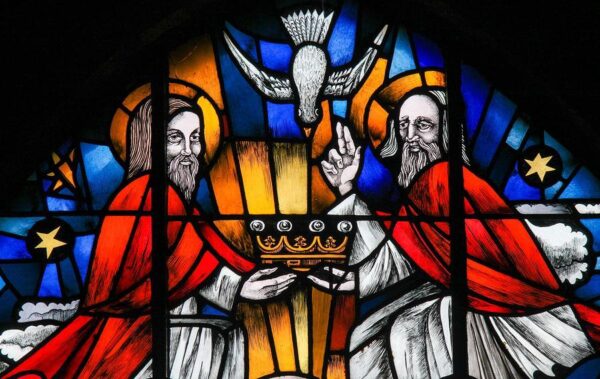
For Swedenborg, the incarnation of Jesus is not simply the story of a divine being sent by God, nor is Jesus a separate person who works alongside Jehovah. Rather, Jehovah Himself entered the human world and took on a human nature in the person of Jesus Christ. In other words, the God whom Israel worshiped as Jehovah became visible and approachable through Jesus. This understanding gives a deeper meaning to the words of Isaiah: “There is no other god besides me, a righteous God and a Savior.” If Jehovah alone is the Savior, and Jesus is our Savior, then Jesus is not separate from Jehovah. He is Jehovah made manifest in human form.
This understanding reveals an important truth on how we think about our relationship with God. We do not need to search for a distant God or earn our way into the Divine presence. In Jesus Christ, God has already come to us. The invitation of Isaiah remains open: “Turn to me and be saved, all the ends of the earth!” Perhaps this is the most beautiful message of the incarnation. God did not wait for humanity to find its way back to Him. Out of divine love, He came to us. He entered our world, shared our human experience, confronted the powers that threaten our spiritual lives, and opened the way toward salvation.
My brothers and sisters in God, let us take a good portion of time this week to reflect deeply on the meaning of Advent. Let us acknowledge the deep and ever-present love of God surrounding us within and without.
Blessings,
Rev. Junchol Lee