
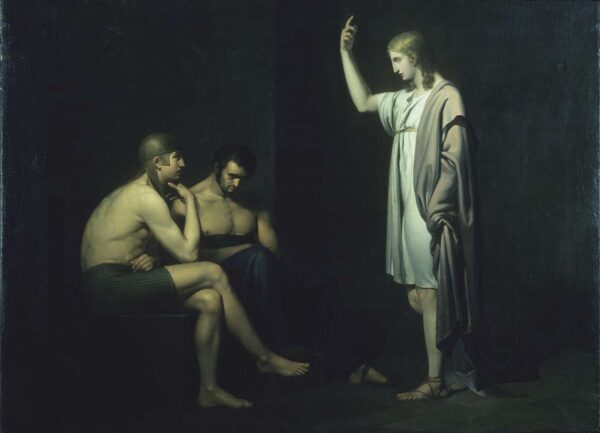
Joseph answered Pharaoh, “It is not I; God will give Pharaoh a favorable answer.”
Genesis 41:16
Dear members and friends,
The emphasis on inward transformation helps explain an often-overlooked aspect of Emanuel Swedenborg’s own spiritual journey. Before his calling to reveal the spiritual meaning of the Scripture, Swedenborg underwent an intense period of self-examination recorded in his Journal of Dreams. Modern readers are often fascinated by mystical dreams and search for hidden predictions or arcane secrets. Swedenborg himself did something very different. He examined them as revelations of his own spiritual condition.
Again and again, his dreams exposed subtle forms of pride, ambition, self-confidence, fear, and attachment to worldly honor. Rather than reassuring him of his spiritual progress, they humbled him. They became instruments of repentance. In one moving reflection he acknowledges that everything good within him came only from the Lord’s mercy. Gradually his attention shifted away from the dreams themselves and toward the transformation they were producing.
This is exactly what is illustrated in the stories of Genesis. The dreams are never the destination. They serve the Lord’s greater work of regeneration. For this reason, Swedenborg warns against giving extraordinary importance to dreams for their own sake. Most dreams arise from natural causes; from our bodily condition, memories, daily concerns, or the complex interaction between the natural and spiritual worlds. Only in rare circumstances do they become genuine vehicles of divine revelation. Even then, their purpose is never curiosity about the future but renewal of the heart.
The dreams of the cupbearer and baker illustrate this beautifully. The cupbearer eventually remembers Joseph. The baker disappears from the story. Spiritually, one faculty is restored to useful service while another undergoes judgment. Regeneration always involves both restoration and removal. The Lord strengthens what is genuinely receptive to heaven while gently removing what cannot coexist with heavenly love. This process is not confined to dramatic moments of biblical history. It unfolds quietly within each of us.
The important question is never, “What does my dream predict?” The more important question is, “What is the Lord seeking to restore within me?” Joseph’s answer remains the final word: “Do not interpretations belong to God?” Indeed, they do. For the Lord is the true Interpreter; not only of dreams, but of every hidden movement of the human heart.
This inner work prepares us for what follows in the next chapter. In Genesis 41, Joseph is called from prison to stand before Pharaoh and interpret the king’s dreams. Historically, this moment transforms Joseph from a forgotten prisoner into the governor of Egypt. Spiritually, Swedenborg sees an even deeper transformation. The truths that have been quietly formed through temptation, humility, and regeneration are now ready to govern a natural life. What was once hidden in the prison of the inner person is brought into the light, where it can become a source of wisdom and blessing for others.
Joseph does not claim the honor for himself. Standing before Pharaoh, he says, “It is not in me; God will give Pharaoh a favorable answer.”
This is the mark of genuine regeneration. The more the Lord transforms us, the less we trust in our own intelligence and the more we recognize that every true insight and every genuine good comes from the Lord alone. Perhaps this is why the story of Joseph continues to inspire us. His dreams, the dreams of the cupbearer and baker, and Pharaoh’s dreams all point beyond themselves. They are stages in the Lord’s work of bringing order out of confusion, hope out of suffering, and usefulness out of years of preparation.
Blessings,
Rev. Junchol Lee